Stats Citations Anchors for AEO and SEO. How to Keep Them Clean

By
Sagar Joshi
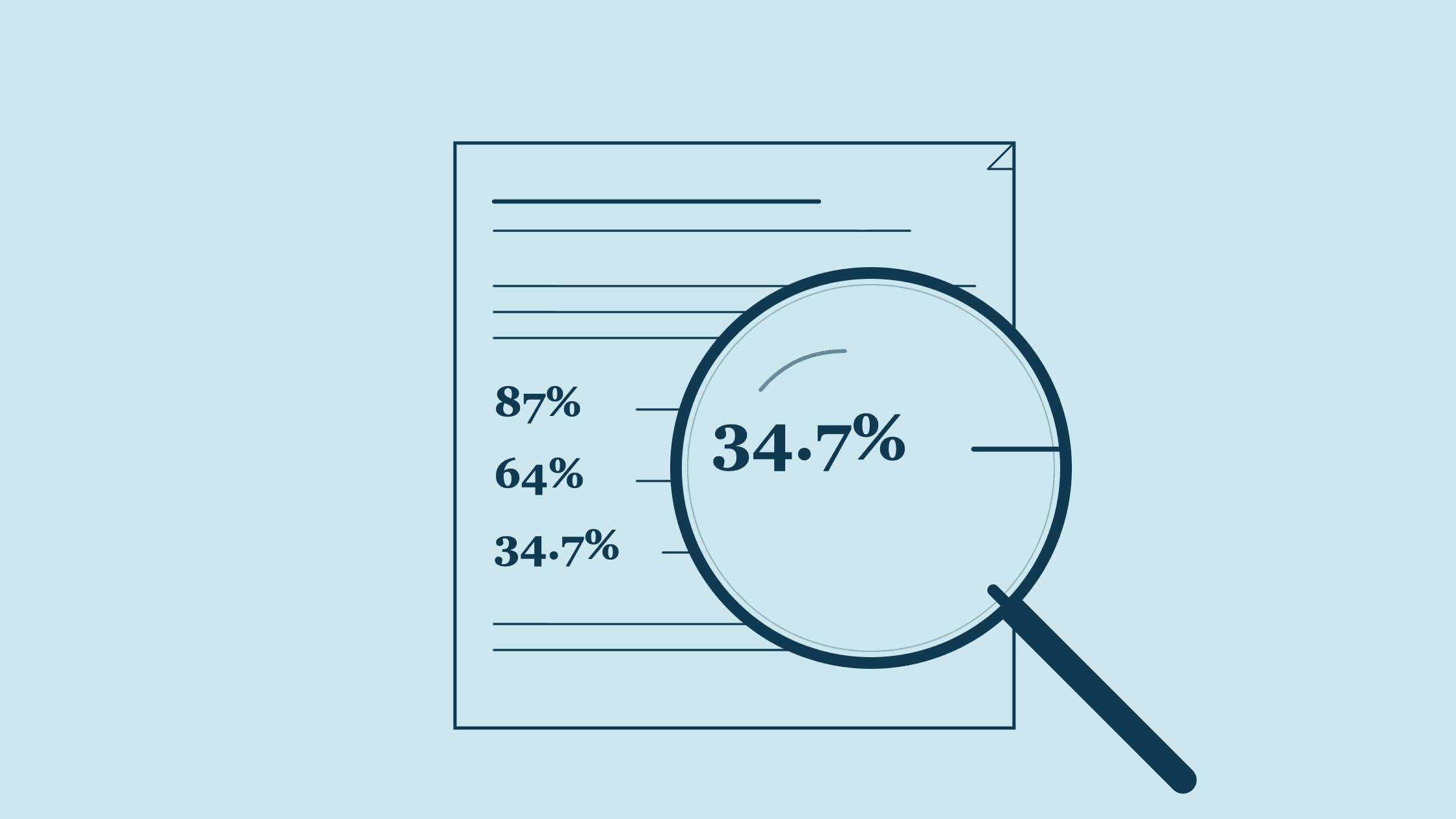
Last week, I fact-checked a draft with 11 statistics. Seven couldn't be traced to a primary source. That's a 64% fail rate on numbers the writer treated as settled fact. It's good enough to sink a piece in both AEO (Answer Engine Optimization) and SEO.
Statistics are one of the strongest signals LLMs and search engines use to decide which pages deserve to rank or get cited. Pages built on verifiable primary-source stats get pulled into AI answers and earn E-E-A-T authority in organic search. Pages built on untraceable numbers get filtered out, or worse, cited and later publicly corrected.
Why Do Statistics Matter for AEO and SEO?
Search engines reward pages that back claims with traceable primary sources, and LLMs preferentially quote content where the underlying data holds up. Fabricated stats undermine a piece's credibility in both systems because verification failures propagate quickly.
SEO rewards Experience, Expertise, Authoritativeness, Trust (E-E-A-T). Pages that cite primary research with clean links build topical authority over time. Pages that recycle "according to industry research" without a source look thin to Google's quality systems and get outranked by content that did the work.
AEO runs on the same logic, but tighter. When Perplexity, ChatGPT search, or Gemini pulls content from your page, the engine looks for claims backed by verifiable sources. A stat without a source is a stat they'll skip. Worse, if they cite it and a reader traces the trail, the brand behind the answer takes the hit, not the LLM.
How Do Statistics Decay Across Citations?
Statistics decay through citation chains. At each hop across articles, context drops, figures get rounded, and dates disappear. By the time a stat has been quoted in five or more articles, the original methodology, scope, and date are usually gone, leaving a plausible-sounding number with no verifiable backing or clear origin.
The trail for a dead stat almost always looks the same.
Article A cites Article B. Article B cites a LinkedIn post. The LinkedIn post cites a conference talk. The conference talk has no slides online. Somewhere five hops back, someone made up a number, rounded aggressively, or misremembered a different figure. By the time it lands in Article A, it reads "according to industry research."
Three things happen at every hop:
Context drops: The original study might say "among SaaS companies with 50–200 employees in North America." Three articles later, it's just "companies."
Figures round: A 34.7% finding becomes "over one-third," then "about 40%," then "nearly half."
Dates disappear: A 2019 study is cited in 2026 without a timestamp, and readers assume it's current.
The worst offenders are gated PDFs and vendor-funded "state of the industry" reports. They get cited for years after the sponsoring company pivots or takes down the landing page. The stat outlives the source.
What Counts as a Primary Source?
A primary source is the organization that produced the data, not an article citing it. It can include peer-reviewed studies, government data releases, company earnings reports, and original survey reports from research firms. Summaries, LinkedIn posts, and uncited secondary articles don't count, no matter how widely they're quoted.
My two rules are simple:
Delete any stat that doesn't link to a primary source. Not a summary, not a recap, not a LinkedIn post. The research itself.
Keep any stat that verifies cleanly and sits on an open page. Lead-gen forms don't count. A reader, or an LLM crawler, shouldn't have to give up an email to confirm a number you used.
This way, the stats in the final piece are true, and both Google and the answer engines can see it.
How Do You Fact-Check Stats at Scale With Claude Projects?
Set up a Claude Project with fact-checking instructions, then batch-process every statistic in a draft through the same consistent ruleset. The Project keeps methodology uniform across sessions and flags stats you'll need to manually verify, like those only confirmable through Google SERP snippets rather than accessible source pages or primary research.
Single-chat verification works for small jobs. For anything with more than five stats, a Project earns its keep because the rules stay loaded across every session and every piece.
The instructions below are what I paste into the Project's custom instructions. Copy and adapt.
Project instructions to copy
You are a fact-checking assistant for blog content optimized for AEO and SEO.
Your job is to verify statistics against primary sources and organize findings
for a human writer to review.When I share a statistic to verify, do the following:
Locate the original primary source. The primary source is the organization
that produced the data, not an article citing it. Examples: peer-reviewed
studies, government data releases, company earnings reports, and original
survey reports from firms like Gartner, Forrester, Mordor Intelligence, or
MarketsandMarkets.Classify each stat into one of three buckets:
VERIFIED: Primary source located, figure matches, source is accessible
without a lead-gen form or paywall.SERP-FLAGGED: You can see the figure in Google search snippets but
cannot access the actual source page. The writer must manually verify
these. Organize them in a separate section of the output.UNVERIFIABLE: No primary source found, or the trail leads to a dead
link, social media post, or uncited secondary article. Recommend
deletion.For every VERIFIED stat, capture:
The exact figure as it appears in the primary source
Publication date of the original research
Sample size and methodology if disclosed
Direct URL to the primary source, not a press release
Scope caveats: geography, industry, time period, filtering
Flag any stat older than three years with a note. It may still be usable,
but I will decide case by case. Age matters more for fast-moving topics
(AI, SaaS pricing, consumer behavior) than for stable ones.If a figure appears in many articles but has no traceable origin, classify
it UNVERIFIABLE regardless of how widely it's quoted. Viral doesn't mean
verified.Never invent a source. If you can't verify, say so plainly. Do not patch
gaps with plausible attributions like "according to industry research" or
"studies show."When a primary source sits behind a gated form, flag it separately.
Gated sources aren't usable in published content unless the same figure
exists in an ungated location that a reader or LLM can reach.Output format: Markdown table with columns for Stat, Status, Source URL,
Date, Methodology, Notes. Put SERP-FLAGGED and UNVERIFIABLE stats in
separate tables below the verified one.
The SERP-flagged category does the heaviest lifting. Without it, Claude will sometimes mark a stat as "verified" when the figure matches a Google snippet, even when the actual source page returns a 404 or is behind a paywall. That isn't verification. That's trust by proximity, and it's exactly how bad numbers survive long enough to show up in AI answers under your byline.
What Happens When You Publish Verified Stats?
Unverified stats build slow-motion liability. Google reads them as weak E-E-A-T signals, which makes the page easier to outrank during helpful-content updates. Answer engines either filter the stats out of citations or attach them to your brand right before somebody traces the trail to nothing. Verified stats work the opposite way and keep paying off for years.
Here's how the bad version plays out. The page ranks fine for a few months. Then a reader, a competitor, or an AI agent checks the number and finds the trail dead.
Clean fact-checking pays compound interest. Verify a stat once, archive it with its source, and that number carries you across articles, pitches, and pillar pages for years.
In the long run, it develops trust. People start relying on what you say.
Scale Content Reliably With Dayfive
The fact-checking system above is one piece of a larger problem I work on at Dayfive. Content teams are shipping more output than ever, and most of it reads like everything else on the web.
Dayfive builds AI content workflows that protect trust at scale. Primary-source verification, like the Project above, is part of it. So are brand-voice guardrails that catch generic phrasing before it reaches lean teams publishing at volume.
At Dayfive, we help you build such AI systems with guardrails to keep your brand's trust alive. It's a 3-month engagement; give it a shot.
Reach out to Sagar at Dayfive.
By
Sagar Joshi


© Copyright 2024, All Rights Reserved